Expert Aluminum Foundry Services for Bespoke and Industrial Castings
Sophisticated aluminum foundry solutions are crucial in modern manufacturing. They merge innovative technologies with traditional casting methods to manufacture both specialized and industrial elements. These services improve design capabilities and increase performance. As production industries progress, the demand for premium castings remains on the rise. Understanding the nuances of these services highlights their essential position in fulfilling different industrial demands. What significance does this hold for the forthcoming manufacturing landscape?
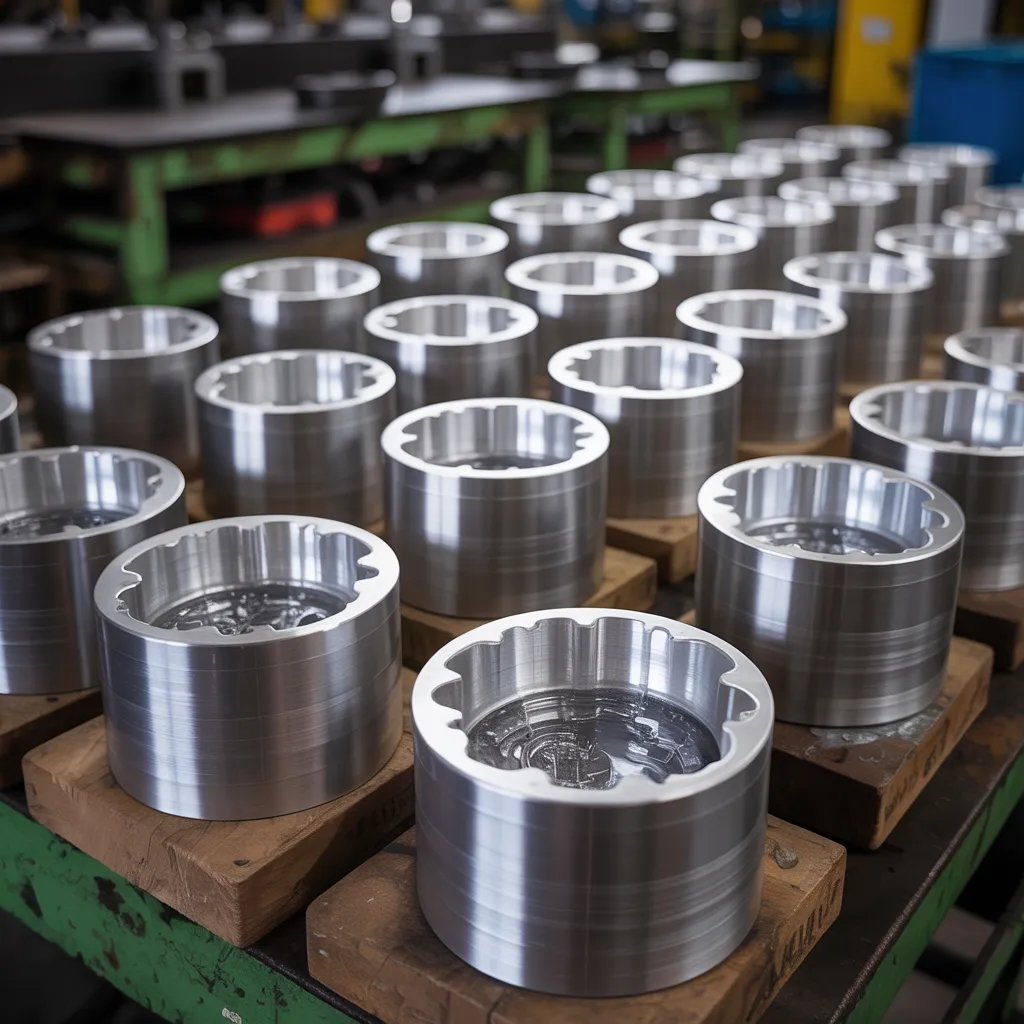
Comprehending Sophisticated Aluminum Foundry Services
Through industrial development, mastering advanced aluminum foundry services becomes essential for manufacturers aiming for efficiency and quality. These services involve a range of processes such as mold design, metal pouring, and thermal treatment, all focused on producing high-precision castings. Advanced aluminum foundries utilize state-of-the-art technologies featuring computer-aided design (CAD) and simulation software, which increase the accuracy of molds and minimize production time. Furthermore, the implementation of automated systems in the casting process decreases human error and boosts output consistency.
Moreover, advanced foundry services are defined by their capability to cater to varied industrial demands, from automotive components to aerospace parts. This flexibility allows for customized alternatives, guaranteeing that manufacturers obtain products tailored to their requirements. By utilizing these current techniques, companies can enhance their operational efficiency and preserve competitive advantages in an increasingly demanding market. Understanding these services is essential for manufacturers aiming to optimize their production capabilities.
Perks of Aluminum for Custom Castings
While various metals can be used for custom castings, aluminum stands out due to its unique combination of properties that enhance performance and efficiency. Its low weight characteristics render it perfect for uses where weight reduction is critical, particularly in automotive and aerospace applications. Aluminum further displays outstanding corrosion-resistant properties, ensuring longevity and durability for cast components.
The material's excellent thermal and electrical conductivity also boosts its practicality, making it ideal for thermal management and electrical applications. Furthermore, aluminum can be easily fabricated and machined, permitting complex geometries and precise tolerances in custom castings.
Its recyclability is another significant advantage, supporting sustainability practices while retaining material integrity. Moreover, aluminum's capacity to tolerate high temperature fluctuations without warping enhances its reliability in demanding environments. In summary, the advantages of aluminum make it an ideal choice for manufacturers looking for efficient and durable custom castings.
Key Differences Between Custom and Industrial Aluminum Castings
Custom aluminum castings and industrial aluminum castings vary significantly in design flexibility and production volume. Custom castings often allow for more intricate designs, tailored to specific needs, while industrial castings focus on efficiency and cost-effectiveness for larger quantities. Recognizing these differences is crucial for determining the appropriate casting method based on project requirements.
Design Flexibility and Complexity
Design flexibility and complexity distinguish custom aluminum castings from their industrial counterparts, allowing manufacturers to tailor components to specific applications. Custom castings permit intricate designs, accommodating distinctive shapes and features that meet exact functional requirements. This adaptability is essential in industries such as aerospace and automotive, where performance and efficiency hinge on specialized components. In contrast, industrial castings typically conform to standardized designs intended for mass production. While they may provide reliability and uniformity, they lack the nuanced specifications often necessary in specialized projects. The ability to include complex geometries, varying wall thicknesses, and specialized surface finishes in custom castings improves overall product performance, providing a competitive benefit for businesses that focus on innovation and precision in their manufacturing processes.
Production Capacity and Pricing
How do production volume and cost influence the selection between custom and industrial aluminum castings? Production volume plays a critical role in determining the overall cost and feasibility of aluminum casting projects. Industrial aluminum castings are usually produced in large quantities, gaining from economies of scale that decrease the per-unit cost. In contrast, custom castings are often manufactured in smaller batches, which can lead to higher production costs due to the specialized nature of the molds and processes involved. Additionally, the complexity of custom designs may require more intricate tooling, further elevating expenses. Consequently, businesses must weigh their specific needs against budget constraints and production capabilities to make informed decisions about whether to choose custom or industrial aluminum casting solutions.
The Function of Technology in Optimizing Aluminum Foundry Methods
Modern technology plays a crucial part in optimizing aluminum foundry processes by introducing automation and innovative methods. The integration of 3D printing has modernized mold creation, while advanced quality control techniques ensure superior product consistency. Jointly, these advancements increase accuracy and effectiveness in aluminum casting operations.
The Automation of Casting Processes
In the last several years, a substantial shift towards automation has transformed aluminum casting processes, enhancing efficiency and precision. Advanced technologies, such as robotic arms and automated molding systems, have streamlined operations, minimizing manual labor and minimizing human error. These innovations permit foundries to achieve reliable quality in castings while enhancing production times. Additionally, automation enables real-time monitoring and data collection, facilitating immediate adjustments to maintain optimal conditions throughout the casting process. This integration of technology not only decreases waste but also supports sustainable practices within the industry. By adopting automation, aluminum foundries are well-positioned to meet the increasing demands for custom and industrial castings, positioning themselves competitively in a rapidly evolving market.
3D Printing Innovations
3D printing, widely recognized as additive manufacturing, has surfaced as a discover now revolutionary power in the aluminum foundry sector, transforming traditional casting processes. By enabling the creation of intricate geometries and elaborate designs, this technology enables foundries to create lighter, stronger components with enhanced efficiency. The integration of 3D printing into aluminum foundry procedures supports rapid prototyping, reducing lead times significantly. Furthermore, it enables the customization of parts designed to specific industrial applications, improving overall production flexibility. The reduction in material waste and energy consumption further underscores the environmental advantages of 3D printing. As the industry continues to adopt these innovations, aluminum foundries are positioned to enhance their competitiveness and meet evolving market demands effectively.
Advanced Quality Management Techniques
The implementation of advanced manufacturing processes, such as 3D printing, has facilitated improved quality control techniques in aluminum foundries. These advancements permit exact monitoring of casting parameters during production, resulting in better consistency and reduced defects. Automation systems employing artificial intelligence can examine data in real-time, recognizing anomalies that may compromise quality. Additionally, non-destructive testing methods, including ultrasonic and X-ray inspections, ensure that internal structures meet stringent specifications without damaging the final product. Implementing these technologies not only enhances the production process but also promotes a culture of continuous improvement, permitting foundries to adapt quickly to evolving industry standards. Consequently, these advanced quality control techniques contribute to superior outcomes in custom and industrial aluminum castings.
The Way Aluminum Foundry Services Lower Production Costs
Considerable cost reductions for manufacturers result from aluminum foundry services that streamline production processes. Labor costs are minimized and material waste is reduced through the utilization of advanced casting techniques and automation. The precision offered by modern foundry technologies guarantees that components are produced with fewer defects, decreasing the need for expensive rework and scrap. Moreover, the ability to produce complex geometries in a single casting reduces assembly time and costs associated with multiple parts.
Additionally, aluminum's lightweight characteristics contribute to lower shipping costs and enhanced energy efficiency during use, which can lead to long-term savings. Foundries often provide customized solutions that align with specific project requirements, optimizing both production timelines and resource allocation. In summary, integrating aluminum foundry services into manufacturing operations not only enhances operational efficiency but also substantially decreases overall production expenses, positioning companies for greater competitiveness in their respective markets.
Guaranteeing Quality in Foundry Services for Aluminum
Quality assurance in aluminum foundry services is vital for upholding the advantages achieved from cost reduction strategies. Robust quality control measures guarantee that castings fulfill strict specifications and performance standards, thereby enhancing customer satisfaction and trust. This process encompasses rigorous inspection techniques, including visual assessments, dimensional checks, and mechanical testing.
Sophisticated foundries typically use non-destructive testing approaches to detect potential defects without undermining the integrity of the castings. Additionally, employing standardized protocols contributes to maintaining consistency throughout the production process.
The selection of suppliers plays a vital role in ensuring quality, as trusted suppliers deliver premium raw materials that affect the final product's durability and reliability. Ongoing personnel training in quality management practices cultivates a culture of excellence within the foundry. In the end, a steadfast commitment to quality not only maintains the integrity of aluminum castings but also establishes the foundry as an industry leader.
Future Developments in Aluminum Foundry Services and Manufacturing
Modern technology is revolutionizing the landscape of aluminum foundry services and manufacturing, enabling enhanced efficiency and sustainability. Improvements in automation and robotics are streamlining production processes, decreasing labor costs, and decreasing human error. Moreover, the integration of artificial intelligence and machine learning is facilitating predictive maintenance and quality control, ensuring peak performance and minimizing downtime.
Furthermore, the field's emphasis on sustainable practices is fueling the implementation of recycled aluminum, which not only lowers energy consumption but also tackles environmental concerns. The evolution of advanced casting techniques, such as 3D printing, is moreover revolutionizing production potential, allowing for complex designs and reduced material waste.
As the demand for lightweight and high-strength materials grows across various industries, aluminum foundry services are positioned to advance, offering customized solutions that meet the unique requirements of multiple applications, from automotive to aerospace. These trends are setting the stage for a more environmentally friendly and efficient future in aluminum manufacturing.
FAQ
What Is the Average Lead Time for Custom Aluminum Castings?
The typical lead time for custom aluminum castings spans four to twelve weeks. Elements affecting this duration include complexity, design specifications, and production capacity, which may fluctuate across different foundries and projects.
How Can I Select the Appropriate Aluminum Alloy for My Project?
To choose the right aluminum alloy, one should take into account factors such as strength, corrosion resistance, thermal conductivity, and the specific application requirements. Working with experts can further guarantee perfect selection for project needs.
Is It Possible for Aluminum Castings Be Modified or Repaired After Production?
Yes, aluminum castings can be modified or repaired post-production. Approaches such as welding, brazing, or using epoxy adhesives enable adjustments, though the feasibility depends on the level of damage and the specific alloy properties involved.
What Sectors Typically Employ Advanced Aluminum Foundry Services?
Many industries typically implement advanced aluminum foundry services, including automotive, aerospace, electronics, marine, and construction. Each sector takes advantage of aluminum's low weight characteristics, durability, and corrosion resistance, making it a favored material for multiple applications.
Are Environmental Factors Considered in Aluminum Casting Processes?
Yes, environmental factors in aluminum casting processes include energy utilization, greenhouse gas emissions, and waste management. Companies are increasingly adopting sustainable practices to decrease environmental footprint and boost recycling efforts within the aluminum production lifecycle.